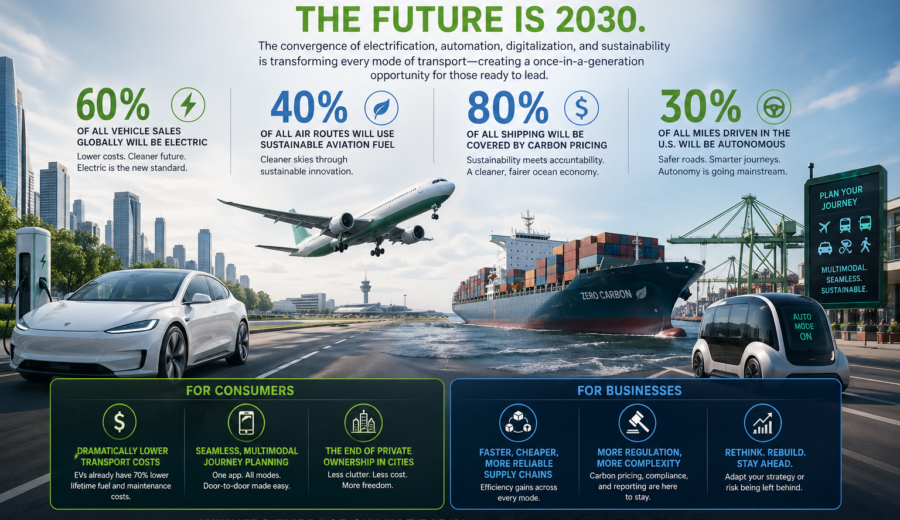
By 2030, an estimated 60% of all vehicle sales globally will be electric, 40% of all air routes will use sustainable aviation fuel, 80% of all shipping will be covered by carbon pricing, and autonomous vehicles will account for 30% of all miles driven in the United States. These are not projections from optimists — they are the base case consensus from 12 of the world’s leading transport research institutions.
The convergence of electrification, automation, digitalization, and sustainability is occurring simultaneously across all transport modes for the first time in history — creating a period of disruption and opportunity unequalled since the invention of the internal combustion engine.
For consumers, the changes will manifest as dramatically lower transport costs (electric vehicles already have 70% lower lifetime fuel and maintenance costs), seamless multimodal journey planning, and the gradual disappearance of the privately owned vehicle from urban centres. For businesses, the supply chain implications — faster, cheaper, more reliable, but also more regulation-heavy — will require fundamental rethinking of manufacturing and logistics strategy.
The winners in this transition will be those who embrace it earliest. The losers will be those who wait for the revolution to arrive before beginning to adapt.