Heart Aerospace X1 Completes 27-Minute Flight as World’s Largest Electric Aircraft
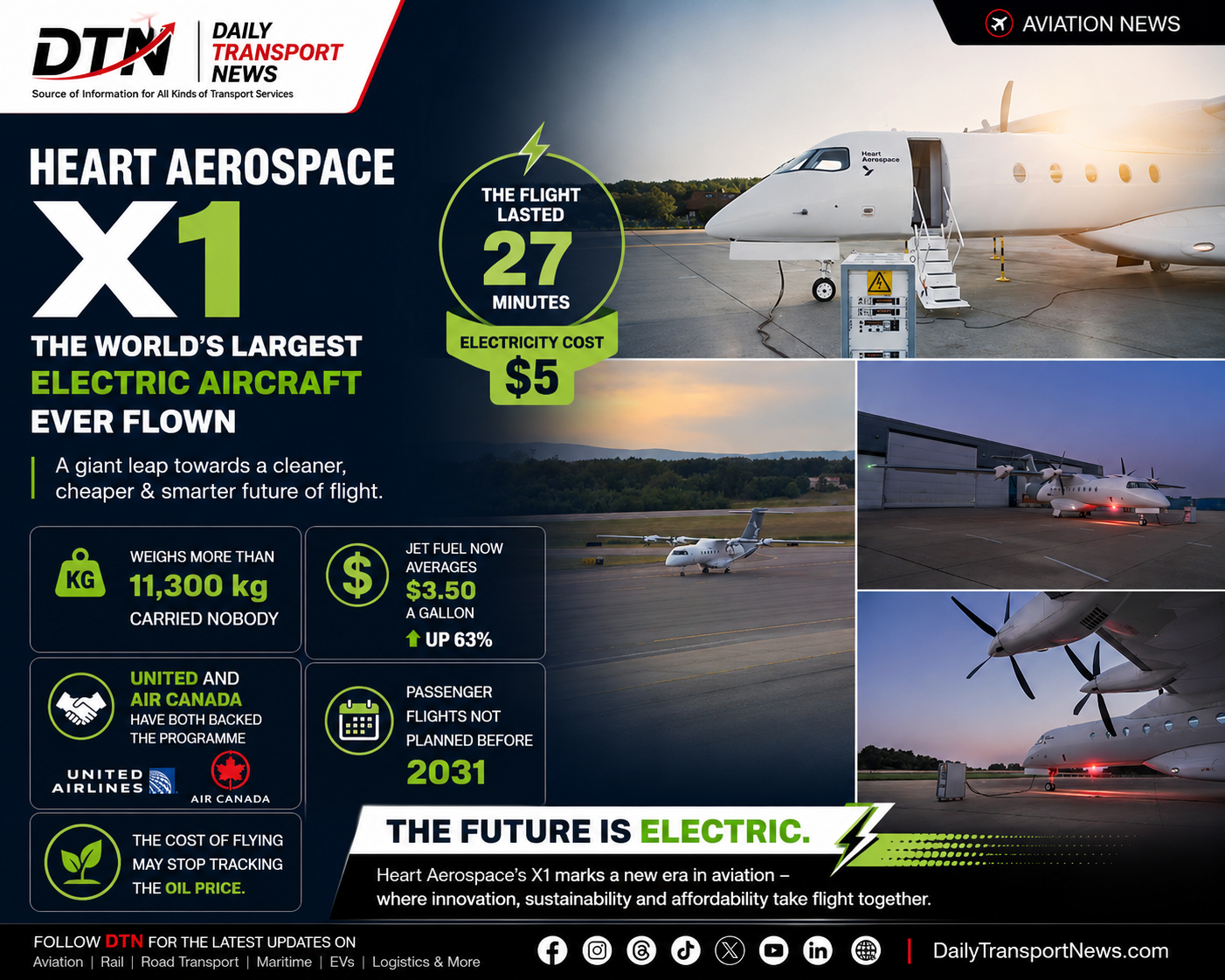
Heart Aerospace has reached a major milestone in the development of electric aviation after successfully flying its X1 demonstrator, described as the largest battery-electric aircraft ever flown.
The aircraft completed a 27-minute flight, demonstrating the potential of battery-electric propulsion for larger aircraft. According to reports, the electricity required for the flight cost approximately $5, highlighting the potential for electric aviation to significantly change the economics of flying.
The X1 weighs more than 11,300 kilograms and carried no passengers during the test flight. The aircraft is part of Heart Aerospace’s wider programme to develop electric aircraft technology for future commercial operations.
A Major Step for Battery-Electric Aviation
Electric aviation has traditionally focused on smaller aircraft because of the weight and energy limitations of current battery technology. The successful flight of an aircraft of the X1’s size represents an important step forward.
The X1 demonstrator is designed to help Heart Aerospace test electric propulsion systems, battery technology and aircraft performance as the company works toward future commercial aircraft.
The programme has received support from major airline partners, including United Airlines and Air Canada, reflecting growing industry interest in lower-emission aviation technologies.
A $5 Flight and the Future Cost of Aviation
One of the most striking details from the test programme is the reported electricity cost of approximately $5 for the 27-minute flight.
While the overall cost of operating an electric commercial aircraft would involve many factors beyond electricity—including batteries, maintenance, infrastructure and aircraft ownership—the test highlights how electric propulsion could eventually reduce aviation’s exposure to volatile fossil-fuel prices.
With jet fuel prices averaging around $3.50 per gallon and reportedly increasing by 63%, airlines continue to face significant pressure from fuel costs.
If battery-electric aircraft become commercially viable at a larger scale, the cost of flying could become less directly dependent on global oil prices.
Passenger Flights Still Years Away
Despite the successful X1 flight, commercial passenger operations are not expected before 2031.
Developing a commercially certified electric aircraft will require further advances in battery technology, aircraft design, safety systems, charging infrastructure and regulatory approval.
The X1’s first flights therefore represent an early but important step toward the future of electric regional aviation.
The Future of Flight Is Electric?
The successful flight of the Heart Aerospace X1 demonstrates that electric aircraft technology is continuing to move beyond small experimental designs.
With increasing pressure to reduce aviation emissions and operating costs, electric propulsion could eventually play an important role in regional air transportation.
The road to commercial passenger operations remains long, but the X1 has now added another significant milestone to the global race toward cleaner and more sustainable aviation.
Follow Daily Transport News for the latest updates from aviation, rail, road transport, maritime, logistics, EVs and future mobility.
Key Facts
| Detail | Information |
|---|---|
| Aircraft | Heart Aerospace X1 |
| Flight Duration | 27 minutes |
| Electricity Cost | About $5 |
| Aircraft Weight | More than 11,300 kg |
| Passengers | None during the test flight |
| Status | Largest battery-electric aircraft ever flown |
| Programme Backers | United Airlines and Air Canada |
| Passenger Flights | Not planned before 2031 |